Makes You Wonder Who Is Better Off

I often wonder about the state of the AMerican church.  We have it so good yet we are not flourishing as we should.  Today I read this article about the church in China. This church cannot be contained nor stifled.  Persecution won’t stop them.  They thrive in the midst of a communist regime. 

It makes me realize that we have taken for granted our freedom to worship.  China’s church is anticipating a major explosion, while the American church declines.  Can we be revived without facing persecution or will it take something severe to turn around the apathy in the American Church culture?  Just a curious question.

Take time to read this lengthy article from The National Post:

It is when Rev. Ezra Jin says there are about 3,000 underground Protestant church services being celebrated around the Chinese capital on this bright autumn Sunday, that you begin to get an idea of the leap of faith that is happening in this decidedly atheist country.

Rev. Ezra is happily chatting in advance of his second service of the day at Beijing Zion Church, a grandiose name for the series of large and small conference rooms he presides over. They are located above a karaoke bar in an old-fashioned hotel deep in the Beijing suburbs. His is what is called a “house church.” It is not sanctioned by the Communist government, hence it is not legal.

But as sometimes happens in China, it is tolerated — for the moment, anyway.

“For a long time, the government cracked down on house churches. But recently the situation changed,” he explained. “It has started to face up to the existence of house churches and make an effort to establish a formal relationship with them.”

It’s not a perfect situation, he admits, but a vast improvement to what it was.

“Ten years ago, house churches, like ours, wouldn’t dare to think they could have such a large space to develop,” he said.

In recent years, “house” Protestants have been harassed, fined, beaten by police and even jailed for the temerity of shunning the officially sanctioned churches and starting their own.

Several kilometres deeper into the maze of Beijing’s suburban sprawl, the Shouwang Church is finishing up the second of its three Sunday services. The congregation of about 250 people is packed into a large boardroom in a medium-rise building that is otherwise full of small companies and offices.

The sign in the eighth-floor hallway pointing the way to the service is testimony to the breathing room the government has allowed house churches recently. The fundraising chart that dominates a side wall tells another story, however.

As Rev. Jin Tainming explains it, last year police and government officials mildly hassled he and his congregation, trying to force them to close-up shop. But Shouwang members stood firm, so officials tried another tack this year and began pressuring the landlord not to renew the church’s lease.

“We were planning to build a church before that,” Tainming explains in an interview, “but the new pressure convinced us to accelerate our pace.”

Almost half the money for the church has been raised so far.

It’s a bold step to go from illegal and underground to laying a cornerstone and people such as Rev. Ezra are watching with interest — if less than wild optimism. He certainly believes the day will come when Christians in China can build their own churches, Rev. Ezra says, “but maybe not for 10 years.”

Estimates range as high as 130 million, but according to Carsten Vala, a specialist in Protestantism in China at Loyola College in Maryland, there are probably about 50 million Christians in China.

About 40 million of them are non-denominational Protestants.

There are no divisions into Episcopalian or Baptist or whatever in China. There are simply Christians — who in Mandarin literally follow “Christ-religion” — and they are divided into three groups: Catholics, Protestants and Orthodox.

Mr. Vala said the Protestants “tend towards fundamentalism,” in their worship, but really are “post-denominational.”

He also makes the point that “by and large, Protestants in China are very apolitical.”

There are so many college-aged young men waiting for the elevator in the office building where Shouwang Church is located, it looks like a high-tech business must be sharing the floor with the Protestant worshippers. It is an eye opener when they all head towards the church service.

At both Shouwang and Beijing Zion churches, the congregation is surprisingly young and well educated. It’s a phenomenon that is being noted in cities across China, particularly since it is so dramatically different from what has been happening in the countryside where older, working-class congregations formed the backbone of the Protestant house-church movement for many years.

Mr. Vala says university students in China see Protestantism “as sophisticated and modern.” 

Rev. Ezra caters to his youthful parishioners with a lively rock service that includes a full band plus a female vocalist with a microphone in one hand and the other raised in testament as she belts out: “I love you deeply Jesus/ I love you more than everything in my life.”

About half the congregation has its right hand raised, mimicking her gesture, and is swaying along with the music. A relaxed and welcoming Rev. Ezra Jin has little trouble explaining the appeal religion has in China today.

“After 1949 [when the Communist Party came to power], all the old beliefs were cracked apart,” he says. “Then there was the Cultural Revolution and the ideals of Communism fell apart, too. So, all Chinese people just looked to money then.

“But in fact money couldn’t satisfy their spiritual needs.”

The breakdown in the national value systems led to “a crisis in belief,” he said, a void that religion is increasingly filling for many people.

Rev. Ezra notes that ancient Taoism and Buddhism are also experiencing a revival in China at the moment, but that Christianity, particularly Protestantism, is expanding the fastest of all.

“The form of our congregations is flexible and our doctrines match today’s reality and people’s needs,” he said.

Pan Jianxiao brought three university friends with him to the crowded Sunday service at Shouwang Church. The 22-year-old from Wenzhou — the city in Zhejiang province Mr. Vala calls “the Jerusalem of China — explains: “I tell my friends I’m Christian. I don’t hide it. Sometimes they are curious about this. They asked me what things I do as a Christian. I told them about our congregation, prayers, etc.”

Mr. Pan said that if anyone asks, he tells him that “this religious belief marks the meaning of my life, my personal values, how I live my life.”

Rev. Ezra was a 21-year-old student of geophysics at the prestigious Peking University in Beijing in 1989 when the troops marched into Tiananmen Square and mowed down the students protesting for democracy.

A friend of his was among those killed and for the first time Rev. Ezra Jin went to a Christian funeral to pay his last respect.

As he tells it now, the experience changed his life. “I saw people with faith in God and it shocked me.”

Rev. Ezra’s journey into Christianity led him to the Nanjing Theological Seminary in 1992 and later to advanced theological studies in the United States.

Today, Rev. Ezra counts himself among “the first generation of priests in China since the Cultural Revolution.”

The bespectacled minister and his fellows, he said, “were mostly young and faced a lot of difficulties, particularly because of the limitations imposed by the government.”

But from a congregation of “a dozen people in 2007,” Rev. Ezra now boasts 600 parishioners, a Sunday school, a marriage counseling service and a regime to train disciples to help with the parish work.

He is both enthusiastic and optimistic about what the future holds.

“Abroad is in what we call the post-religious era. But it is just the opposite here in China,” he said.

“When the ideals of Communism were spent after 30 years, religion started to rejuvenate. Today it is an explosion that will last another 20 to 30 years. Religion will incrementally affect all of Chinese society.”

HT: True Discernment
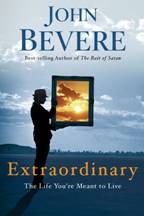
Book Review – Extraordinary

One of my favorite authors of all time, John Bevere has released another masterpiece.  Though there seems to be an influx of books recently released on the subject of finding your purpose, Extraordinary is set apart.  Bevere reveals that our purpose to live extraordinary lives was not lost in the Garden of Eden because of Adam’s sin.  The author reminds us that Jesus came to reverse the curse. What was lost could now be restored.  Extraordinary is a book that focuses on God’s grace to help us live extraordinary lives.  Lives of power, holiness and faith.  Bevere challenges the believer to cultivate what God has planted inside of us.  The way this book is written built excitement or should I say anticipation for what God wants to do through us.  This is a great read!

Summary:

There’s a question that troubles many believers: “Why am I not experiencing more joy, more hope, more satisfaction, more intimacy, more power, more everything in my Christian life–didn’t Jesus promise that?”

He did promise an abundant life, but too many people are trapped by the curse of “the ordinary.” They have accepted the wrong idea that following God means losing individuality, creativity, and a passion for achieving lofty goals.

Nothing could be further from the truth!  John Bevere builds a convincing case, straight from Scripture, for a way of living marked by extraordinary experiences and accomplishments—the life God always intended for his children.

Here is a guide to understanding God’s incredible plans, and how to enjoy a life where he adds the “extra” to “ordinary.”

clip_image002

Author Bio:

John Bevere is an internationally popular conference speaker, teacher, and author of bestsellers, including The Bait of Satan, Drawing Near, and Driven by Eternity. His award-winning curriculum and books have been translated in over sixty languages and his weekly television program, The Messenger, is broadcast around the world. John and his wife, Lisa—also a bestselling author and speaker—reside with their family in Colorado Springs, Colorado. Visit his ministry website at www.messengerinternational.org.

You can get a copy of Extraordinary at christianbook.com. Or at Random House Publishers.

Stretching My Leadership

I am on a constant journey to grow in leadership.  Lately I have been looking to grow as a pastor and I am trying to learn more about how we can build our church.  No, I am not looking for church growth methods, but rather a simple process where we can see steady growth. 

Right now we are at the 100-125 barrier.  This is our first major hurdle to clear.  We hit 100 and dip back down…hit 100 and dip down again.  At RFA we  must discover what we can do to break the barrier.  I know that numbers aren’t everything, but souls are everything.  To get past any barrier, we must evaluate whether we are impacting souls for eternity.

Yesterday, I was able to attend the Business Leaders Summit at the Church of Pinnacle Hills.  Dr. Ronnie Floyd is a phenomenal leader and preacher.  Needless to say, I can learn from him.  At this luncheon he presented the process to discovering our future.  He spoke in the context of business leadership but I left with a process for our church.

I have read many books on purpose, church growth, leadership, vision and processes.  By far, this simple process Dr. Floyd spoke about was the most practical and applicable for our church.  He laid out the simple steps to get to your future and it struck a chord with me.  I left the luncheon with the feeling, “Finally, that is what I have been waiting for.

I am not the smartest guy in the world.  I do, however, read alot of books but most of them are written by guys who are running in the thousands.  They share their philosophy based on where they are, not where they have come from.  Dr. Floyd’s process however, could work if you had 25 or 2500.

The whole premise of his message was, “The process always precedes the product.”

Here is the process he shared:

1. Start with missional vision and core values.  Define your missional vision and core values.  Core Values are guiding principles that create a culture that allows you to fulfill your future.  These are the things that are non-negotiable.  The things you live by.

2.  Next is the agreed upon goals.  Define your desired results.  What do you want to see in the end?  What is it you are working for?

3.  Then, identify your barriers.  Ask yourself, “What stands in my way?  What keeps me from accomplishing my desired results.”

4.  Define your Objectives.  Simply, make plans that will remove the barriers.

5.  Last, Make actions and directives.  Lay out specific steps to propel us to accomplish our future.  This is basically planning how you will make it to the end results.

6.  This process leads to the vision of your future.

One thing Dr. Floyd said that arrested my attention was, “The difference between a good leader and a great leader is follow-through.”  It hit me like a ton of bricks.  Follow-through happens to be a weakness of mine.  Not because I don’t finish what I start but rather I have too many irons in the fire, juggling too many things that take away the focus.  I am challenged to dedicate a certain portion of everyday to following through on the vision.

If you would like a copy of the process, here is a pdf file that I made from Dr. Floyd’s notes. 

These things can be applied to church, ministry, business or family.  Enjoy!

Do you have a Cause?

Do you have a cause to fight for?

Every person has a purpose for living.  Every person, that God has created, is destined for great things.  There is, however, a tragedy to this.  Not every one discovers their purpose. 

Implanted within you is something that you are passionate about.  You may not even notice it but inside of you is something that makes you passionate when you think about it.  Stop right now and think of something that stirs your heart.  Inside of you God has placed a cause for your life.

As I journey again through the Old Testament writings about the Kings of Israel and Judah, I noticed something about King David.  He was not yet king of Israel, he was just a young man with a cause.  Goliath was defying the army of Israel and the living God.  David catches wind of it and he is hot.  Although he is not the greatest of warriors, he is not even in the army, his heart is stirred.  His cause arises within him.  He voices his disgust that the army of Israel will not fight the giant, Goliath.  David’s brother then rebukes him and accuses him of pride.

David says, "What have I done now?  Is there not a cause?" (I Samuel 17:29)

There is a cause!  David chose to be the one to fight the 9 foot giant.  When man has a cause there is no obstacle too big for him.  When God implants within you a cause nothing can stop you but you.  David could have sat back and said, "I can’t fight the enemy here, I am not even in the army. It is not my place."  He chose, however, to fulfill his purpose.  God had placed that passion in David not the army.

There is a cause inside of you that God wants to use you to fulfill.  No matter how big the obstacle seems, if you are called to fulfill it, nothing can stop you.  Remember in the story that David did not wait until Goliath made the first move.  David ran at Goliath.  What a funny picture!  A kid with a slingshot running towards a guy that is two foot taller than Shaquille O’Neal.  There was no intimidating David. He had a cause.

God is waiting for His people to fulfill their cause.  We cannot be intimidated by the obstacles before us.  No matter how big they are, we cannot cower down.  We have a mission to fulfill.  My passion may not be the same as yours but you and I must each pursue our passions.  If we all pursue the cause inside of us, the body of Christ will be complete.  Run after the giants and fulfill your purpose.

Afraid To Witness

I read this article on Trevin Wax’s blog.  I thought it perfectly gives the main reasons we do not share Christ with others.  These principles helped me see some areas I can work on in my own life and I am challenged to share Christ more.  Enjoy!

From Trevin Wax:
”What do you do when church members tell you that they truly desire to share their faith and yet feel too afraid? How can you help church members become bold enough to share the gospel?

I start out by diagnosing the specific reasons this church member is afraid to witness:

  • Some worry that witnessing to a stranger might seem distasteful and turn them away from the gospel.
  • Others worry that witnessing to close friends or relatives might change something in the relationship. They don’t want to risk the friendship or damage their family ties.
  • Some people fear rejection.
  • Others worry that they don’t know enough about Christianity to give good answers.

Once you have diagnosed the root causes of the church member’s fear, you can begin to explain why fear should not stand in the way of evangelism. It is appropriate to approach the task of evangelism with some trepidation. After all, we are participating in a sacred task of obedience to our Lord. But “being afraid” – whatever the reason – is not an excuse to not evangelize. Why not?

First, we have been commanded to make disciples. Christ does not provide any loopholes in his statement. It is a command for all able Christians. We are not commanded to evangelize only when we overcome our fears (that may never happen); we are to make disciples despite our fear.

Secondly, we should realize that we have little reason to fear. Most unsaved people are not hostile to the gospel. In fact, research from Thom Rainer and others demonstrates that a great number of non-Christians are open to hearing about the faith of others. When you speak kindly and graciously about the gospel, you will find that most people react kindly and politely, even if they reject your call to repentance.

Third, we should do everything in our power to minimize the reasons for our fear.

If lack of knowledge is one of reasons you are afraid to share the gospel, then do some more learning. Be ready to answer and give a defense for your faith. Dive into some apologetics and have some resources handy. Whenever you are asked something you do not know the answer to, simply be honest and admit your lack of knowledge. It is okay to say, “I don’t know. Let me get back with you.”

If you worry that sharing the gospel might damage a familial relationship, then consider the words of Christ, who tells us that the gospel will divide families. You should do everything in your power to unconditionally love and respect those in your family, even if they do not accept the truth of the gospel. But at some level, the gospel is offensive, and if the gospel divides you, so be it. Only make sure that it is the offense of the gospel that causes one to stumble, not your offensive manner of evangelism.

Christians who are afraid to participate in evangelism readily recognize their human weakness and frailty. Instead of denying this weakness, we should embrace the truth that we are indeed powerless to convince others to trust in Christ.

We depend upon the convicting power of the Holy Spirit. Our fears should drive us to our knees in prayer. Satan would have us fearful. God would have us emboldened by unswerving trust in his power to save.”

The Fat Lip

The other night, Sonya was at Women’s Ministries and it was just the boys and Hannah.  We are still amazed or rather shocked at some of the things Hannah says and does.  What I am trying to say is, we wonder often where she comes up with this stuff.

Now to the story, I was playing with Hannah and she, out of the blue, looks me in the eyes and says, “Do you like my lips?”  Shocked at the unusual question I replied, “What?”  She again asked, “Do you like my lips?” and then she puckered in Hannah’s own way.  So of course, I passionately replied, “Yes, honey, you have beautiful lips.”  She went back to playing.

Later in the evening, after Sonya came home, Hannah was in the kitchen and tripped.  She fell but not just like any fall.  She fell flat on her face and busted her lip.  PANIC!  No Hannah didn’t panic, we did.  There was blood rushing out.  Hannah’s crying, and we are trying to assess the damage.  It looked like a gash in her lip where her teeth hit.  (I was going to take a picture of it when it was bleeding, but I thought you might think I was insensitive. And yes, I knew I was going to put it on the blog.)  We got Hannah cleaned up and she had a fat  lip.

I relived the evening from the question Hannah had asked and then the busted lip.  She needed affirmation about her lips for some reason.  All kids need affirmation, especially little girls.  They need to know they are beautiful.  Affirmation is critical because there are times when they will not feel beautiful (when their lip is fat) and they will have to rely on knowing that you think they are beautiful.

As parents it is easy to talk down or pick apart our kids.  It is a natural tendency to focus on the negative aspects of their character and actions.  One thing I have been trying to improve is to focus on the good in them.  It is proven that negative words last longer than positive ones.  That means, we must give them more positive words than negative.  So when they have a fat lip, they will know that they are still beautiful.

fat lip 2

Quotes From Grandma’s Old Bible

Since we moved last year, I have not had the space to put up all of my books.  We recently remodeled my office and added some bookcases so now, I am able to put out all my books.  As I was sorting through the books, I found my grandma’s old Bible.

I began to thumb through it and found some great quotes.  I am amazed at how “used” this Bible was.  It is a sign that my grandma was a student of God’s Word.  It has challenged me to dig in more to the Scriptures and “use” my Bible.

Over the next couple of days I am going to share some of the timeless wisdom found in this old Bible.  Here is today’s:

People say God stopped His supernatural works in the first century. I’ve never heard anyone say the devil stopped his.

Would God expect us to go up against a supernatural enemy (devil) without supernatural weapons to fight him?